

Travelling later in life can be enjoyable and straightforward, but it often benefits from a little more preparation. If you are looking for a travel clinic for older travellers in Barkingside, the most useful starting point is not simply a list of vaccines. A good pre-travel review should consider your destination, itinerary, long-term conditions, regular medicines, previous vaccinations, insurance and the physical demands of the journey.
Age on its own does not determine whether someone is fit to travel or which vaccines they should have. Two people of the same age can have very different health needs. The practical aim is to identify the parts of the trip that could affect your health, make sure ongoing treatment is organised, and allow enough time to get destination-specific advice before departure.
Why older travellers may need a more detailed pre-travel review
TravelHealthPro notes that older travellers are more likely to have pre-existing medical conditions and may have less physiological reserve to cope with illness, heat, dehydration, disrupted sleep or a demanding journey. That does not mean older people should avoid travel. It means preparation should be more individualised, particularly when there are heart, lung, kidney, neurological or metabolic conditions, reduced mobility, or several regular medicines.
A useful pre-travel discussion should therefore look beyond the destination name. It may include the length of the trip, time zones, altitude, heat or cold, rural travel, cruise or pilgrimage travel, access to medical care, planned activities and whether you will be visiting family or staying for an extended period.
Start planning earlier if you can
The NHS advises getting travel-health advice at least 4 to 6 weeks before travel because some vaccines require more than one dose or need time to build protection. TravelHealthPro suggests that older travellers ideally review their plans and medical history around 6 to 8 weeks before departure. If your trip is closer than this, it can still be worth seeking advice rather than assuming it is too late.
Earlier planning is especially helpful when you need to check vaccination records, discuss a long-term condition with your GP or specialist, arrange enough regular medication, clarify airline assistance, or investigate whether a medicine is restricted in the country you are visiting.
Bring your itinerary, health information and medicine list
For an older traveller, the quality of the advice depends heavily on the information available. Before a travel-health appointment, write down your travel dates, countries and regions, stopovers, accommodation, planned activities and any time you expect to spend in rural or remote areas. If you are visiting friends or relatives, say so, because the style and duration of travel can change exposure to food, water, mosquitoes and local infections.
You should also bring or have access to your vaccination history and a current list of medicines, including prescription medicines, over-the-counter products and relevant supplements. Tell the clinician about allergies, previous serious vaccine reactions, immune-suppressing treatment, recent illness and any major change in your health.
Plan regular medicines before you travel
Medication planning deserves its own place in the travel checklist. TravelHealthPro advises people who take regular medicines to prepare well in advance, make sure treatment is optimised and arrange enough supply for the trip and reasonable delays. Medicines are best kept in their original pharmacy packaging, and carrying a copy of your prescription or a prescriber letter can be helpful, particularly if you need treatment abroad or are questioned at a border.
Do not assume that a medicine that is legal in the UK can be carried freely into every country. Rules vary, including for some controlled medicines and products that are available over the counter here. Check the destination and transit-country requirements in advance, using the relevant embassy, high commission or official FCDO travel advice where necessary.
For long journeys, think about when doses are normally taken and whether crossing time zones could cause confusion. Do not change the dose or timing of prescription medicines simply to fit a flight schedule without suitable clinical advice. If a medicine needs refrigeration, needles, oxygen or other equipment, contact the airline and check storage and security arrangements before departure.
Review long-term conditions before a demanding trip
If you have a long-term condition, a travel-health consultation does not replace the clinician who normally manages it. TravelHealthPro recommends a pre-travel medical assessment for people with pre-existing conditions so that treatment and fitness to travel can be considered. Some people may also need specific fitness-to-fly advice.
Speak to your GP or relevant specialist before travelling if your condition is unstable, you have recently been admitted to hospital, you have had a recent operation, your medicine has recently changed, or you are unsure whether long flights, altitude, heat or strenuous activity are appropriate for you. A pharmacist can still help with medicine organisation, vaccination questions and practical travel-health information, but complex disease management should stay with the clinician responsible for that condition.
Vaccines for older travellers are based on risk, not age alone
The vaccines recommended for a trip depend on the country and region, length and style of travel, planned activities, previous vaccine history and individual health factors. The NHS also recommends that travellers are up to date with routine vaccinations. Older adults should not assume that childhood vaccination provides complete protection for every current journey; equally, not every destination requires a long list of private vaccines.
A travel-health assessment may consider travel vaccines such as hepatitis A, typhoid, rabies, hepatitis B, Japanese encephalitis or yellow fever where they are relevant to the destination and itinerary. Which vaccines are appropriate is a clinical decision. Previous doses, allergies, immune conditions and current treatment can all affect that decision.
Yellow fever needs particular care from age 60
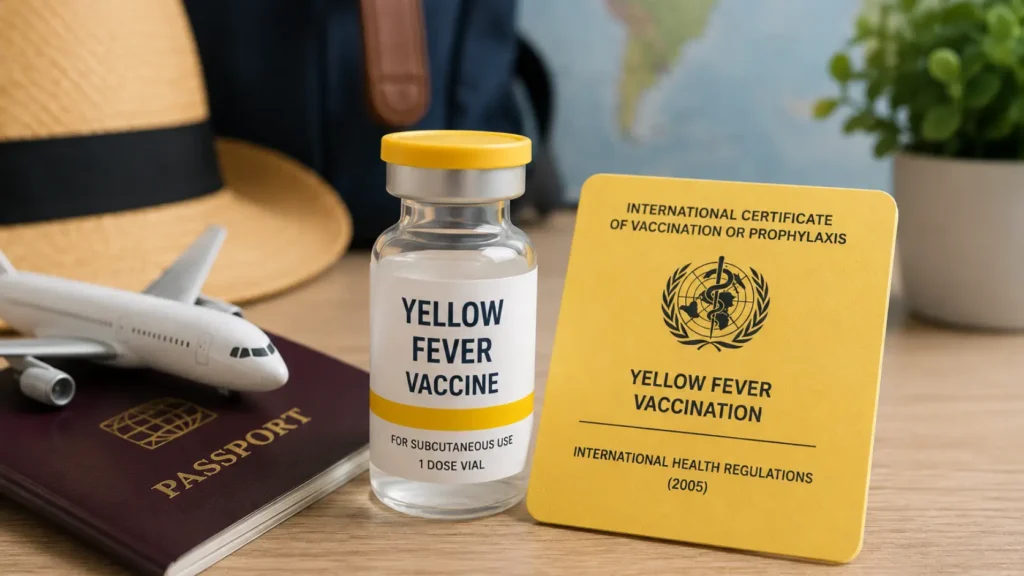
Yellow fever is one area where age can materially affect the risk-benefit assessment. TravelHealthPro states that advancing age, particularly 60 years and over, is a precaution for yellow fever vaccination because the risk of rare serious vaccine-associated adverse events is higher in this age group. That does not mean the vaccine is automatically unsuitable. It means the clinician should weigh the risk from the destination, any certificate requirement and the individual traveller’s health before deciding what is appropriate.
If yellow fever may be relevant to your trip, check destination requirements early and use an authorised Yellow Fever Vaccination Centre for vaccination and certificate services. Fullwell has a separate page about the Yellow Fever vaccine in Barkingside; use that page for the specific service information rather than treating this older-traveller guide as the service owner.
Malaria prevention may need a medicine check
Malaria risk depends on the exact destination and sometimes the region within a country. Older age alone does not determine which malaria medicine is used, but long-term conditions and existing medicines can influence suitability or dosing. TravelHealthPro also highlights that malaria can be more serious in older travellers, making bite prevention and prompt medical attention particularly important.
If your itinerary includes a malaria-risk area, get destination-specific advice. Bring a full medicine list so interactions and kidney or other health issues can be considered. Mosquito-bite prevention remains important even when antimalarial tablets are advised.
Think about the journey itself, not just infection risks
Airports, long flights, queues, heat and changes in routine can be as relevant as vaccines. TravelHealthPro notes that long journeys can be physically demanding and that older travellers may benefit from extra time and assistance. If walking long distances through an airport is likely to be difficult, ask the airline or airport about assistance well before the day of travel.
Long periods of immobility can increase the risk of venous thromboembolism, including deep-vein thrombosis. Individual risk is affected by more than age, so people with previous clots or other important risk factors should discuss prevention with their healthcare provider rather than starting compression garments or medicines on their own.
Heat, cold and altitude can also place extra strain on some long-term conditions. Build rest into the itinerary, stay appropriately hydrated, and be realistic about strenuous activities. If you have heart or lung disease and are planning high-altitude travel or a physically demanding trip, seek tailored medical advice before you go.
Travel insurance matters more when you have existing health needs
Travel insurance should be arranged as part of the health plan, not left until the airport. GOV.UK advises travellers to buy appropriate insurance that covers existing physical or mental health conditions and the activities planned during the trip. Failing to declare a condition or ongoing investigation can affect whether a claim is covered.
Check limits on trip duration, medical treatment, emergency transport and repatriation, and keep the insurer’s emergency contact details with you. If you are travelling in Europe, a valid GHIC or EHIC can provide access to some state-provided healthcare, but it is not a substitute for travel insurance and does not cover every cost.
Food, water, mosquitoes and dehydration still matter
Vaccination is only one part of staying well abroad. Older travellers with kidney, heart, bowel or immune problems may be more vulnerable to complications from diarrhoea and dehydration. Follow destination-appropriate food and water precautions, and seek medical help earlier if illness is severe, persistent or you are struggling to keep fluids down.
Use bite-prevention measures when travelling in areas where mosquito-borne disease is a risk. The exact advice can vary by destination, but practical measures may include suitable repellent, clothing that reduces exposed skin and mosquito nets where appropriate.
When a pharmacist can help – and when another NHS service is better
A pharmacist can be a useful first point of contact for practical medicine questions, vaccination history, travel-health preparation and understanding which issues need a more detailed assessment. For people in Barkingside, Ilford and nearby parts of Redbridge, that can make the early planning stage easier.
However, a travel-health discussion should not delay care for a new or worsening medical problem. Contact your GP or usual clinical team for management of an ongoing condition, recent deterioration, significant medicine changes or questions about fitness to fly. NHS 111 can direct you to urgent help when you need medical assistance now but it is not a life-threatening emergency. For a life-threatening emergency, call 999 or go to A&E.
A practical checklist for older travellers in Barkingside
· Check destination-specific health advice and FCDO travel advice before booking or well before departure.
· Aim to seek travel-health advice several weeks before travel where possible.
· Prepare a written itinerary, including stopovers and rural or remote travel.
· Review regular medicines, storage needs and destination rules for carrying them.
· Carry medicines in original packaging and keep key medicines in hand luggage where appropriate.
· Take a prescription copy or prescriber letter when this may be useful.
· Make sure routine vaccinations are up to date and discuss destination-specific vaccines individually.
· If yellow fever is relevant and you are aged 60 or over, expect a careful individual risk assessment.
· Check travel insurance carefully and declare existing medical conditions.
· Plan assistance, rest, hydration and mobility needs for long or demanding journeys.
Local travel-health planning in Barkingside
Fullwell Pharmacy is located on High Street in Barkingside, Ilford. This article is designed to answer the narrower informational question of how older travellers can prepare for a trip; it does not replace the main travel-clinic page, which remains the place for current service information, booking details and availability.
For current travel-health information and to check what support is available before your trip, visit the Fullwell Pharmacy travel clinic page or contact the pharmacy directly before travelling.
For broader pre-travel preparation, you can also read Top 10 Travel Health Tips Before Visiting a Travel Clinic in Barkingside. If yellow fever is relevant to your destination, see the separate Yellow Fever Vaccine in Barkingside page.
FAQs
What should I know about a travel clinic for older travellers?
For older travellers, the most useful assessment considers more than vaccines. Your itinerary, long-term conditions, medicines, previous vaccination history, insurance and the physical demands of the journey can all affect the advice you need. Planning several weeks before travel gives more time to resolve medication, vaccination or fitness-to-travel questions.
Can I ask a pharmacist in Barkingside about travel health for an older traveller?
Yes. A pharmacist can help with practical travel-health preparation, medicine questions and vaccination information, and can identify when you need a GP, specialist or another service. Check current travel-health service availability before making a special journey.
When should I contact a GP, NHS 111 or urgent care instead?
Contact your GP or usual clinical team for management of a long-term condition, recent deterioration, significant medicine changes or fitness-to-fly questions. NHS 111 can help if you need urgent medical advice now and are unsure where to go. For a life-threatening emergency, call 999 or go to A&E.
Is Fullwell Pharmacy convenient for patients near Ilford and Redbridge?
Fullwell Pharmacy is located on High Street in Barkingside, Ilford, so the location may be convenient for people in nearby parts of Ilford and Redbridge. Check current opening times and the availability of the service you need before travelling to the pharmacy.
Medical disclaimer
This guide provides general travel-health information and does not replace an individual medical assessment. Vaccine, malaria, medicine and fitness-to-travel decisions depend on your destination, itinerary and personal health. Seek appropriate clinical advice for your circumstances, and check current destination and entry requirements before travel.




 the prescription app