

A local pharmacy is often one of the easiest places to start when you need help with a prescription, have a question about a medicine, want advice about an everyday health concern or need to find out which pharmacy service is appropriate. You do not always need a booked appointment for general advice, although some services use appointments or have limited capacity. If the pharmacist cannot provide the help you need, they can advise you about the next step.
This guide explains how using a local pharmacy works in practice: what you can ask about, how prescriptions fit into the process, what information is useful to have with you, and when a pharmacist may recommend that you speak to a GP or another NHS service. For details about the pharmacy itself, visit Fullwell Pharmacy.
What can a local pharmacy help with?
Community pharmacies do much more than hand out medicines. Pharmacists can answer questions about medicines, give advice on many common health concerns and explain whether a pharmacy service may be suitable. The exact services available differ from one pharmacy to another, so it is sensible to check before travelling if you need something specific.
A typical visit might involve asking how to take a medicine, discussing a side effect you are worried about, collecting a prescription, asking what to do about a minor health problem, or finding out whether a pharmacy-based NHS or private service is available. NHS guidance also explains that pharmacists can refer people to a GP or another health professional when the issue needs support outside the pharmacy’s scope.
The useful distinction is that the pharmacy can often be a first point of contact, but it is not the right route for every problem. The pharmacist’s role includes recognising when pharmacy care is appropriate and when you should be directed elsewhere.
Using a pharmacy for prescriptions
For prescription medicines, the pharmacy and the prescriber have different roles. Your GP or another authorised prescriber issues the prescription. The pharmacy receives that prescription, carries out the necessary dispensing checks and prepares the medicine for collection or another agreed supply route.
If you use the NHS Electronic Prescription Service, you can usually nominate a pharmacy so that eligible prescriptions are sent there electronically. This can reduce the need to handle a paper prescription, but the pharmacy still needs to receive a valid prescription before it can dispense the medicine.
If you need detailed information about repeat prescriptions, nomination, collection or local delivery arrangements, use Fullwell’s dedicated prescription delivery and repeat prescription support page rather than relying on this general guide.
When something does not look right — for example, a prescription has not arrived, an item needs clarification or you have a question about how to use a medicine — speak to the pharmacy team. They can explain what they can resolve directly and when the prescriber may need to be contacted.
Accessing pharmacy services and advice
You can usually approach a community pharmacy directly for general advice. Some conversations are straightforward at the counter, while others may be moved to a private consultation area. For specific services, the pharmacy may use a walk-in system, appointments, or a mixture of both.
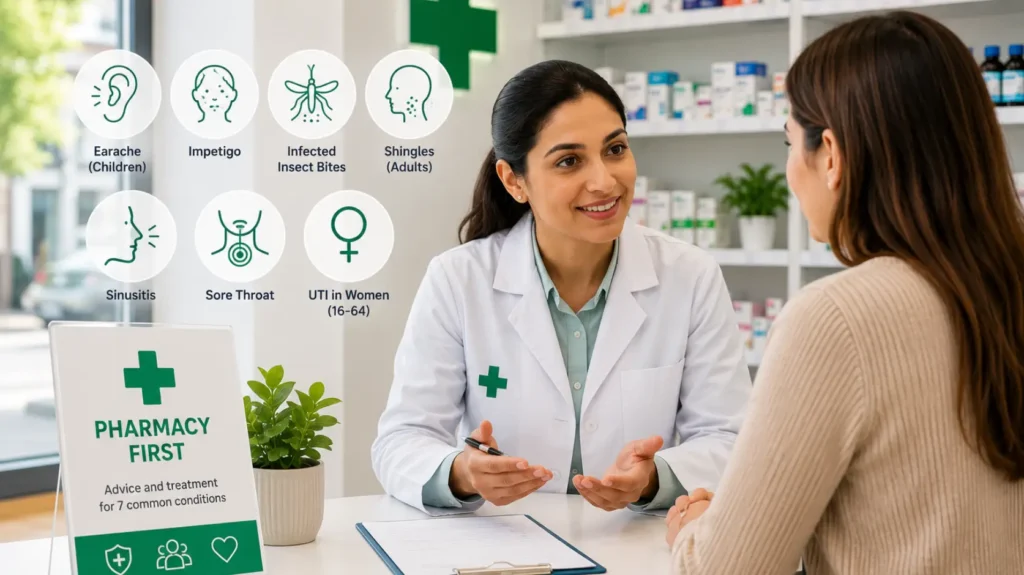
One example is NHS Pharmacy First, which allows participating community pharmacies to provide advice and, where appropriate, treatment for certain defined conditions. Fullwell has a separate Pharmacy First in Barkingside page for the service itself. Keeping that information on the service page avoids turning this guide into a second Pharmacy First landing page.
The same principle applies to private care. If you want to know what private services are currently offered, check the pharmacy’s private pharmacy services information rather than assuming every community pharmacy provides the same services.
Do you need an appointment to speak to a pharmacist?
Not always. For general questions, you may be able to walk in and ask to speak to the pharmacist. Whether you can be seen immediately depends on how busy the pharmacy is and what you need help with.
An appointment is more likely to be useful when you are attending a specific clinic or service, when a longer private consultation is needed, or when the pharmacy manages that service through set booking times. If the reason for your visit is time-sensitive or you need a particular service, contacting the pharmacy before travelling can save an unnecessary journey.
Even when an appointment is not formally required, there may be a short wait while the pharmacist completes prescriptions, consultations or other professional duties. Pharmacy staff can normally tell you whether it is better to wait, return later or use another route.
What information should you bring or have ready?
What is useful depends on why you are visiting. You do not need to arrive with a large file of paperwork for every pharmacy conversation, but having the right details can make it easier for the team to understand what you need.
· For a prescription query: your name and date of birth, the medicine or prescription item you are asking about, and any message or reference you have received from your GP or NHS app.
· For a medicine question: the medicine name, strength if known, how you are taking it, and the packaging or patient information leaflet if you have it with you.
· For a health concern: a clear description of the problem, when it started, anything that has changed, and relevant medicines or allergies you know about.
· For a booked service: the booking details and any specific information the pharmacy asked you to bring.
If you are unsure what the pharmacy needs, ask first. The team can tell you which details are relevant to the service or query rather than asking you to guess.
When might a pharmacist refer or signpost you elsewhere?
Pharmacists work within defined professional and service boundaries. Sometimes the safest and most useful outcome of a pharmacy conversation is advice to use another part of the NHS.
NHS guidance states that if a pharmacist cannot help you themselves, they can refer you to a GP or another health professional. In practice, the route depends on the concern, its urgency and the services available locally. You may be advised to contact your GP, NHS 111, an urgent treatment service or another healthcare professional.
For a life-threatening emergency, call 999 or go to A&E. If you need urgent medical help but are not sure where to go, NHS 111 can help direct you. For more detail about what pharmacists can do, see the NHS guidance on how pharmacies can help.
Using a pharmacy alongside your GP and other NHS services
A pharmacy is best understood as part of the wider healthcare system, not as a replacement for your GP. Different services are designed for different types of need, and the right starting point can change from one situation to another.
A pharmacist may be a convenient first contact for medicine questions, a prescription issue, self-care advice or a pharmacy service. Your GP may be the more appropriate route when you need ongoing medical assessment, diagnosis, monitoring or care that sits outside pharmacy services. NHS 111 can help with urgent problems when you are unsure which service to use, while emergency services are for life-threatening situations.
Using the pharmacy in this way can make the process simpler: start with the service that fits your need, explain the problem clearly, and follow the signposting you are given if another healthcare professional needs to become involved.
When to contact Fullwell Pharmacy
If you are in Barkingside or nearby and want to ask about prescriptions, general pharmacy advice or the services currently available, you can contact or visit Fullwell Pharmacy. The homepage is the main source for current local-pharmacy information and links to individual service pages.
If you need a specific service, check the relevant service page first. This helps you see the correct booking or access information without relying on a general article that may not cover every service detail.
Frequently asked questions
What can a local pharmacy help with?
A local pharmacy can help with prescriptions and medicine questions, advice about many everyday health concerns, and access to pharmacy services. What is available varies by pharmacy, so check with the pharmacy if you need a specific service.
Do I need an appointment to speak to a pharmacist?
Often you can ask for general advice without a booked appointment, but some services and private consultations use appointments or have limited capacity. Contact the pharmacy before travelling if you need a particular service or want to know the best time to attend.
Can a pharmacy help with prescriptions and repeat medicines?
Yes. Pharmacies dispense prescriptions and can answer questions about medicines. For repeat prescriptions, the prescription still needs to be issued by your GP or another prescriber before the pharmacy can dispense it. If you use the NHS Electronic Prescription Service, your prescription can be sent to your nominated pharmacy.
When should I contact a pharmacy instead of my GP?
A pharmacy is often a useful first place for medicine questions, minor health concerns and pharmacy services. If the pharmacist thinks your problem needs a GP, urgent care or another professional, they can advise you where to go next. For urgent medical help, use NHS 111; call 999 or go to A&E for a life-threatening emergency.
Can a pharmacist refer me to another NHS service?
Yes. NHS guidance says pharmacists can refer people to a GP or another health professional when they cannot provide the help needed themselves. The route depends on the situation and local service arrangements.
General information note
This guide provides general information about using a community pharmacy. It does not replace individual advice from a pharmacist, GP or other healthcare professional. Service availability and access arrangements can vary by pharmacy and may change.
Contact Fullwell Pharmacy
For current information about Fullwell Pharmacy in Barkingside, including local pharmacy services and the appropriate next step, visit Fullwell Pharmacy.




 the prescription app